
Six agents. One operations team.
Each Rapax agent owns a job with a defined mandate: briefing, inventory, knowledge, tier-1 support, notification and integration. They do the watching, sorting and paperwork. Your people make the calls, and changes to your network or configuration wait for a person to confirm them.
Not a chatbot bolted onto a dashboard.
Most AI in operations reads what the monitoring stack produced and writes a paragraph about it. That saves reading time and nothing else. A Rapax agent owns a job inside a mandate, works from the same record as the rest of the platform, and hands off to a person with context attached when the job needs judgment.
Who does what.
Oscar
- Trigger
- Someone asks what is happening, or a shift changes.
- What it does
- Briefs from the live console: open incidents, affected services and customers, SLA exposure and what is waiting on a person.
- Result
- A briefing, not a dashboard. Ask Oscar from any page.
Nora
- Trigger
- You import an as-built drawing, describe a network, or ask what connects to what.
- What it does
- Reads the drawing or description, proposes the devices, links and services it shows, and answers topology questions in plain language.
- Result
- Monitoring built in minutes from documents you already have. Nothing is monitored until you approve it.
Wade
- Trigger
- An engineer or another agent asks how to fix something.
- What it does
- Retrieves the runbook, procedure or vendor document and answers from it, citing the source.
- Result
- Grounded answers. If the procedure isn’t documented, Wade says so rather than improvising.
FRANK
- Trigger
- A customer opens a ticket or asks a question in the support portal.
- What it does
- Answers first from your knowledge base, asks for missing details, and hands off to an engineer with the context attached.
- Result
- First-line questions answered before they reach a person; the rest arrive with context attached. Every reply is labeled as coming from an AI assistant.
Grace
- Trigger
- A service event is confirmed, or a stakeholder needs an update.
- What it does
- Composes and sends notifications through your notification profiles, respecting subscriptions and quiet hours.
- Result
- Nobody stops working the fault in order to tell people about the fault.
Bruce
- Trigger
- A new device type, vendor or external system needs connecting.
- What it does
- Builds the integration, with tests, and submits the code for review.
- Result
- Adding a source no longer needs a professional services engagement.
From network drawing to monitored network.
Import
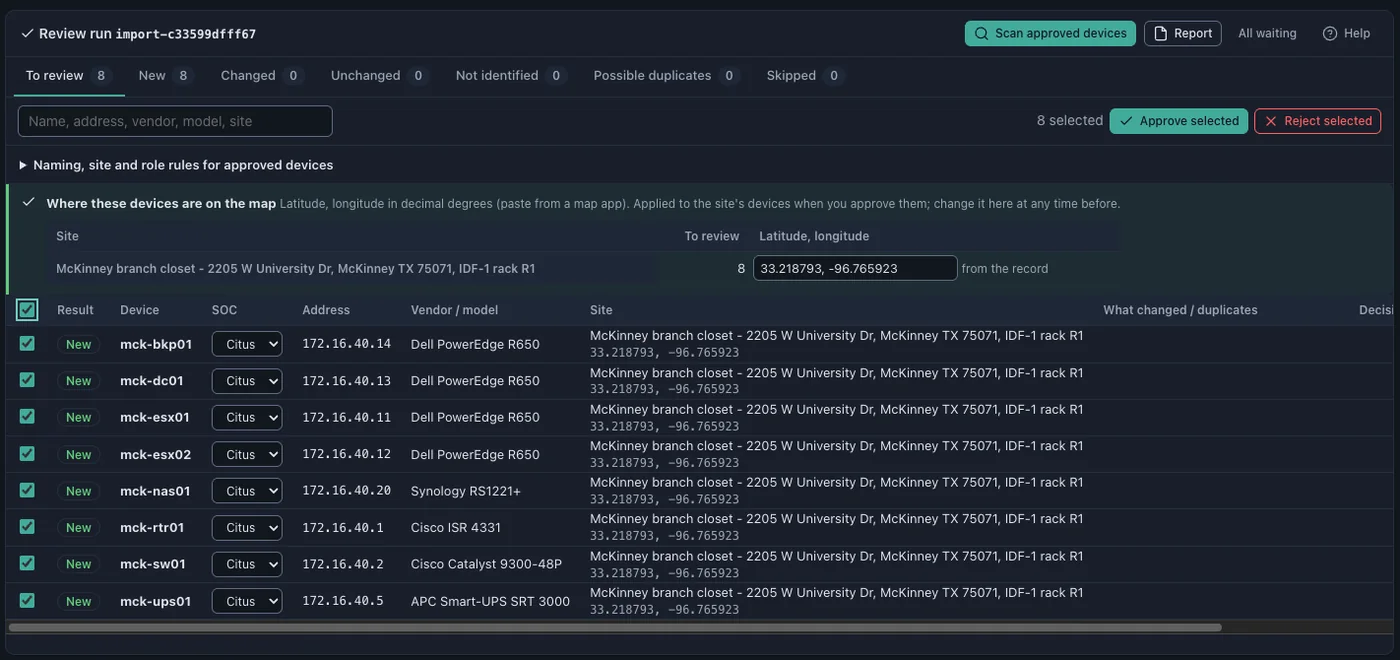
Upload an as-built drawing or describe the network in plain language.
Propose
Nora proposes the devices, links and services the drawing shows.
Review
You approve, edit or reject each one. Nothing is monitored until you approve it.
Monitor
Approved devices start polling, correlating and building baselines.
The runbook answer, with its source.
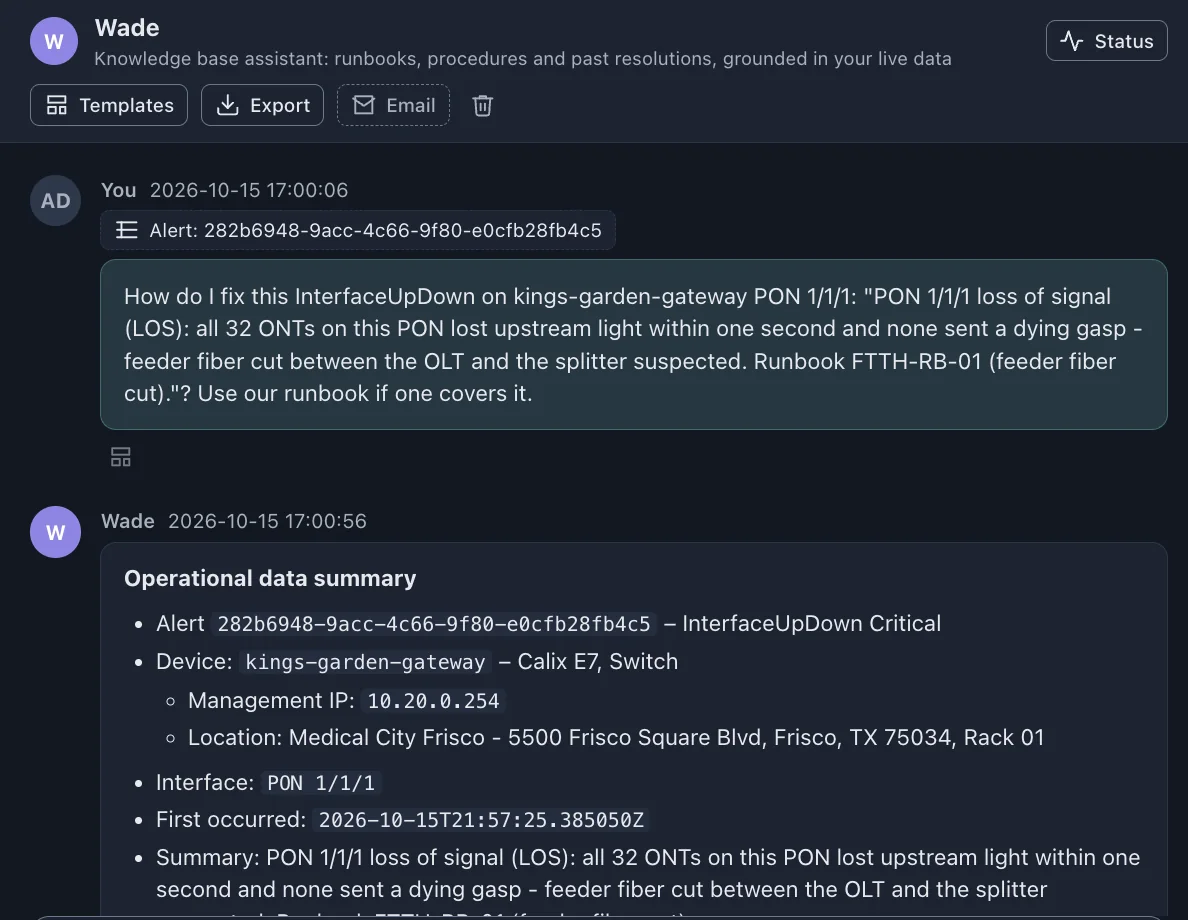
A fiber cut takes down a PON. Correlation collapses 32 ONT alerts under one root cause. Ask Wade what to do and the answer comes from your own runbook, with the document cited, so the engineer on shift does what your best engineer would.
What stops them from making things up.
The failure mode of AI in operations is confident, wrong and fast. Rapax addresses it in the design, not with a better prompt.
Grounded
Answers come from your runbooks and documents, cite their sources, and say when the documentation doesn’t cover the question.
Confirmed
Agents draft, propose and recommend. Changes to your network or your configuration wait for a person to confirm them.
Your provider
Choose Ollama on your own network, or bring your own key for OpenAI, Anthropic, Gemini or Grok. You control the provider and its data terms.
Measured
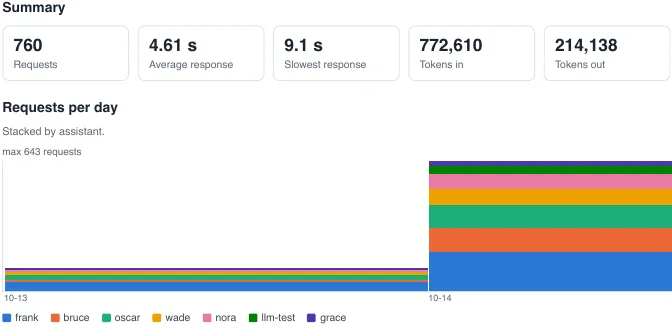
Requests, tokens and estimated cost are reported per assistant, model and day, so AI spend never surprises you.
- Gartner, April 2026: only 28% of AI use cases in infrastructure and operations fully pay off; success comes from building AI into existing workflows.
- Agent names: Oscar, Nora, Wade, FRANK, Grace and Bruce. FRANK always carries an “AI assistant” label in the customer portal.
See them work on your own network.
Request your free 14-day evaluation. Connect your AI provider at first sign-in and the agents start working with your data.
Request your free evaluationPrefer to talk first? Book 15 minutes or email sales@rapax.us.