
White papers, research and videos.
Everything we publish on running networks with smaller teams: the economics, the architecture and the honest numbers. Start with the NOC-in-a-Box position paper if you are evaluating a change to how your operations run.
NOC-in-a-Box: How Rapax 2.0 Takes the Operating Cost Out of Service Assurance
The license is the cheapest part. This paper shows what running monitoring really costs, with every assumption shown, the six-point test for modern assurance, what changed in Rapax 2.0, and how to test it on your own network in 14 days, free.
19 pages · 13 figures · PDF
Download the PDF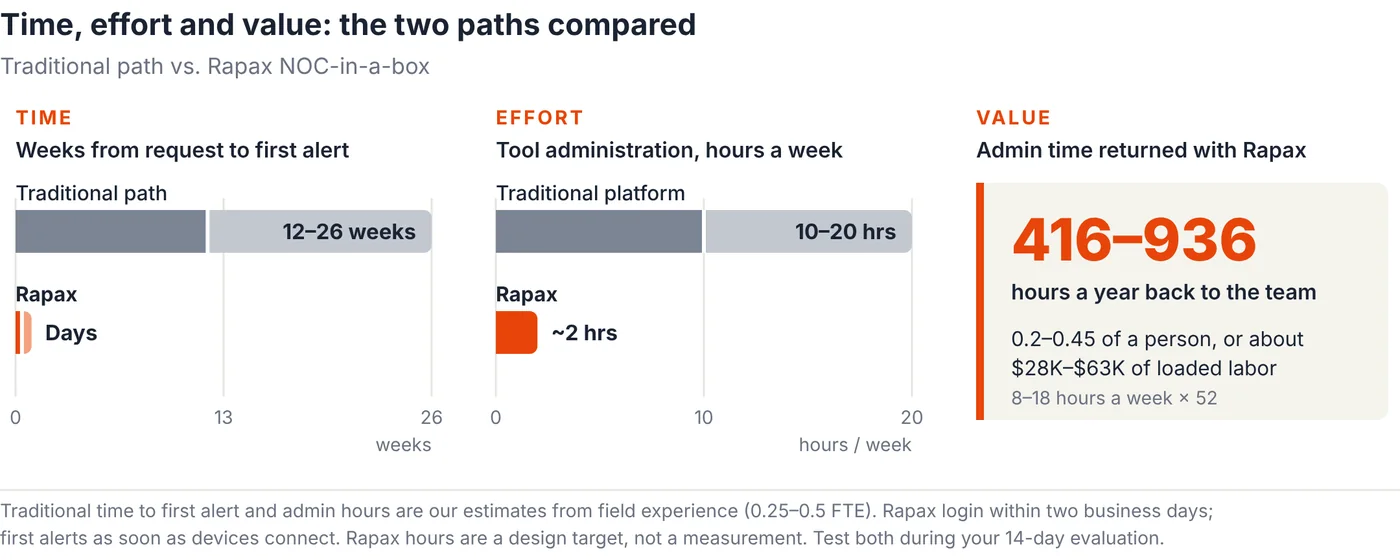
Nine papers on running networks with the team you have.
Written by founder Shawn Ennis for the people deciding how their operations run: the economics, the architecture and where the model is hard. Newest first.
The Last Two Percent
Find the flapping, recurring and periodic faults hiding in your alert history, and know when the next one is due.
Read it →
Fuse or Fold
The economic case for running customer, network, security and IT operations as one AI-augmented Operations Fusion Center.
Read it →
5G Slicing Demands New Tricks From Your Old OSS
What slice-aware operations need from topology, correlation and order-to-revenue. The depth behind the DTW Ignite Catalyst.
Read it →
Tired of Tickets? Ask Frank.
How an AI tier-1 agent handles the support volume that doesn’t need human judgment, and the confidence thresholds behind each decision.
Read it →
The Rationalization Window
Why to consolidate the assurance layer rather than add another platform on top, timed against your renewal cycles.
Read it →
The Last Engineer Who Knew
Retirement, downsizing and expert flight are draining institutional knowledge. A phased roadmap that delivers in weeks.
Read it →
Killing the Alarms
Why the human-in-the-loop NOC stopped scaling, with an honest section on where the model is hard.
Read it →
The Autonomous Carrier
Why the economics of manual operations stopped working. Written for leadership rather than the NOC floor.
Read it →
Ending the OSS/BSS Integration Tax
Why every vendor change triggers another integration project, and how conversational integration breaks the dependency.
Read it →Rapax 2.0 in a minute or so.
Recorded against real Rapax 2.0 screens with lab and demo data. Each one opens on YouTube.
Launch films
 60 s
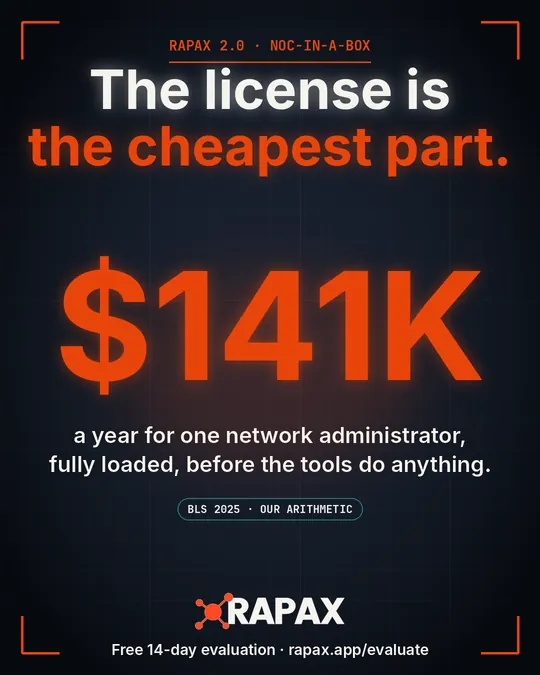
60 sNOC-in-a-Box
The license was never the expensive part. Running it is.
Watch →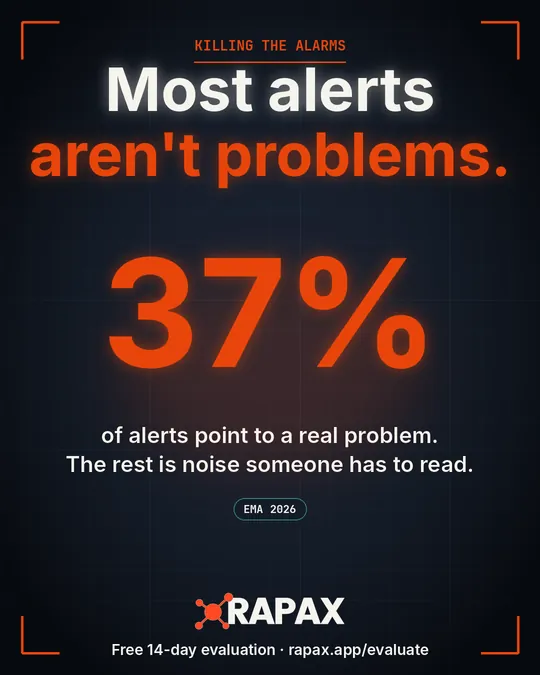 60 s
60 sKilling the Alarms
Most alerts aren’t problems. One of them is.
Watch → 60 s
60 sYour Week Back
What if the tools took two hours a week?
Watch →Product shorts
 40 s
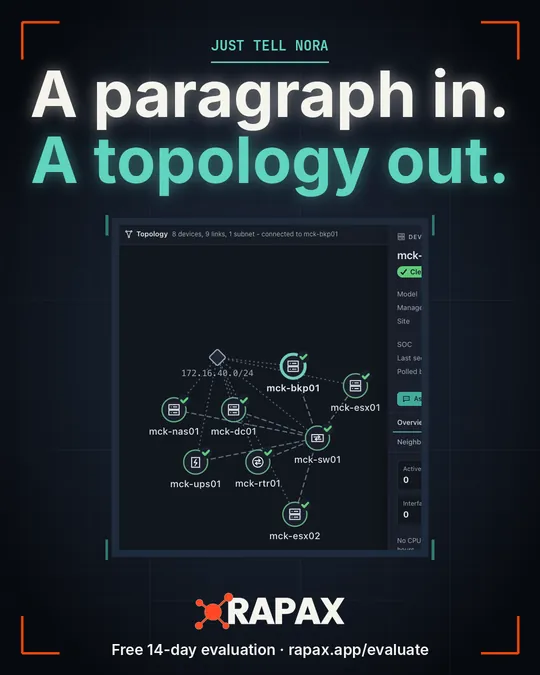
40 sJust Tell Nora
One paragraph in, a topology and service tree out.
Watch →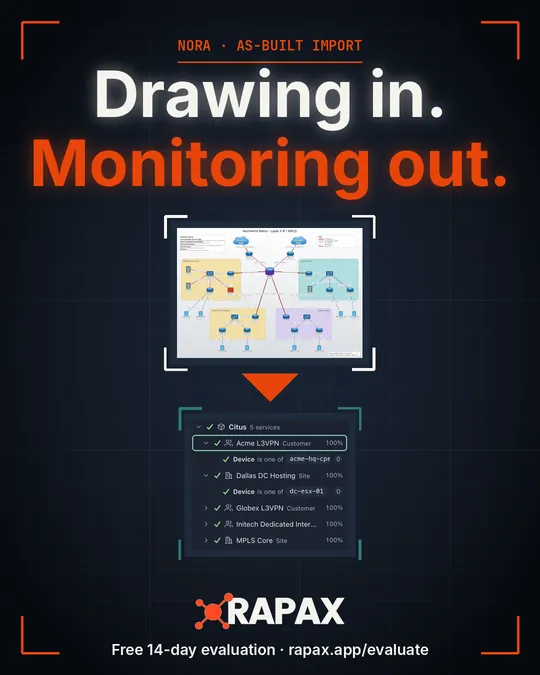 43 s
43 sDrawing In, Monitoring Out
Nora reads an as-built drawing and proposes every device and link.
Watch →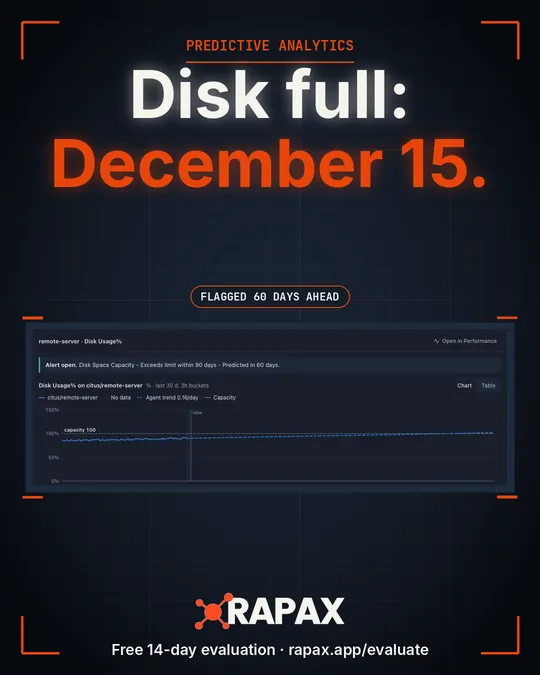 40 s
40 sSmart Data Beats Big Data
Reactive, predictive and preventative, down to a date.
Watch →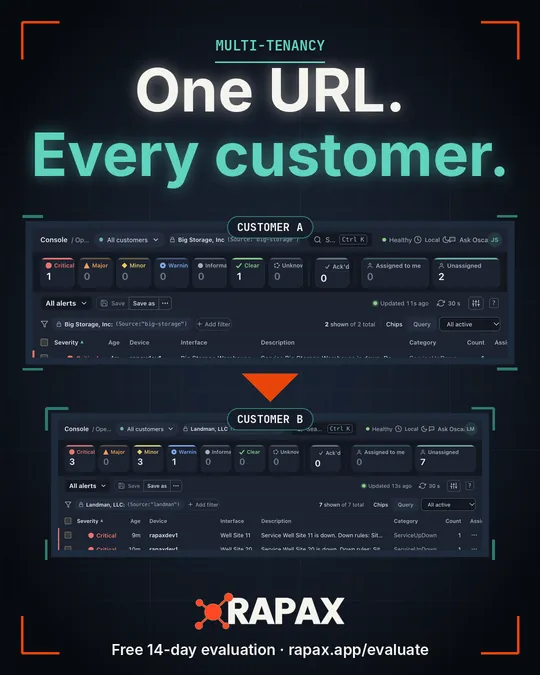 41 s
41 sOne URL, Every Customer
Each MSP customer sees only their own network.
Watch →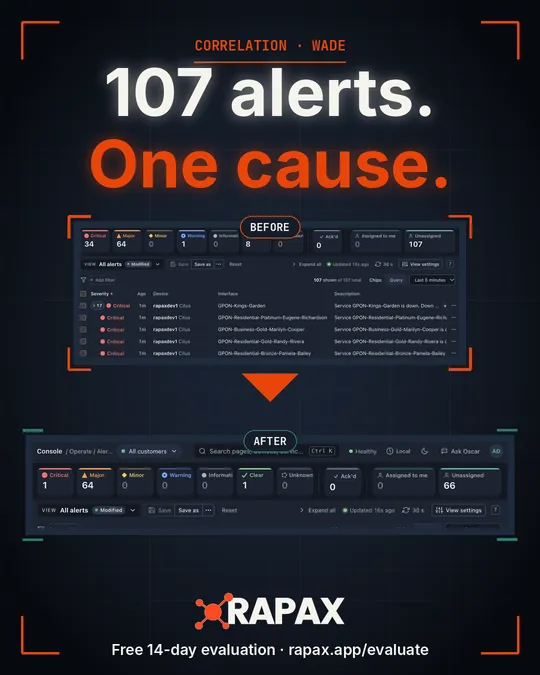 43 s
43 sOne Fiber Cut, One Cause
107 alerts collapse to one root cause, with the runbook fix.
Watch →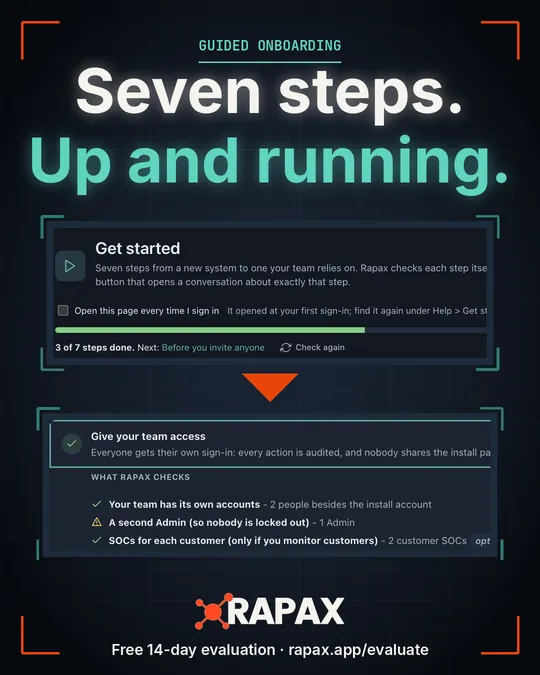 42 s
42 sUp and Running
Seven checked steps from a new system to one you rely on.
Watch → 61 s
61 sGrace Keeps Watch
One email, a reply from the bleachers, a note on the alert.
Watch →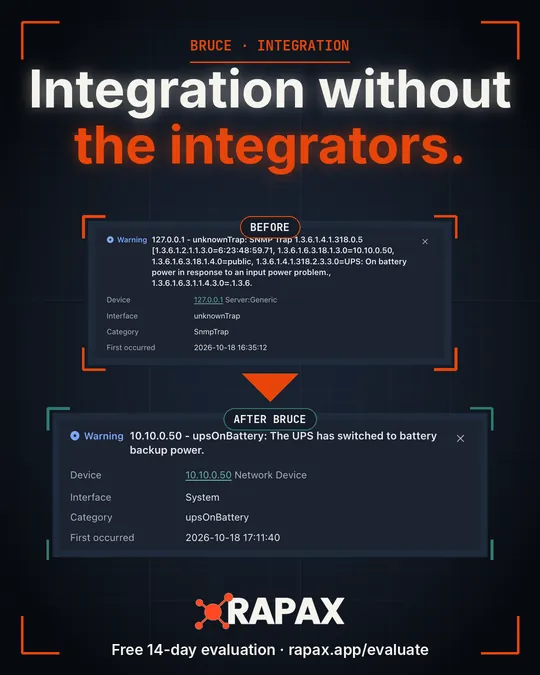 79 s
79 sIntegration Without the Integrators
Bruce turns a vendor MIB into a running integration.
Watch →A 600,000-subscriber fiber ISP, deployed in under two hours.
A mid-market fiber ISP running GPON and XGS-PON across a multi-vendor footprint had solid subscriber telemetry and no way to answer the only question that matters during an outage: how many customers are down right now.
Rapax consumed their existing Kafka streams, built the topology graph from backbone to subscriber, and published correlated service-impact events back into their stack. No device agents, no schema changes, no downtime. Reference calls available on request.
The blog.
Shorter pieces on network operations, AI in the NOC and what agentic operations actually ask of a team.
Prefer to see it on your own network?
That is what the free 14-day evaluation is for.
Request your free evaluationPrefer to talk first? Book 15 minutes or email sales@rapax.us.